
Issue 60 | 5 Minutes with Ross and Yoko Findlay, Niseko Adventure Center (NAC)
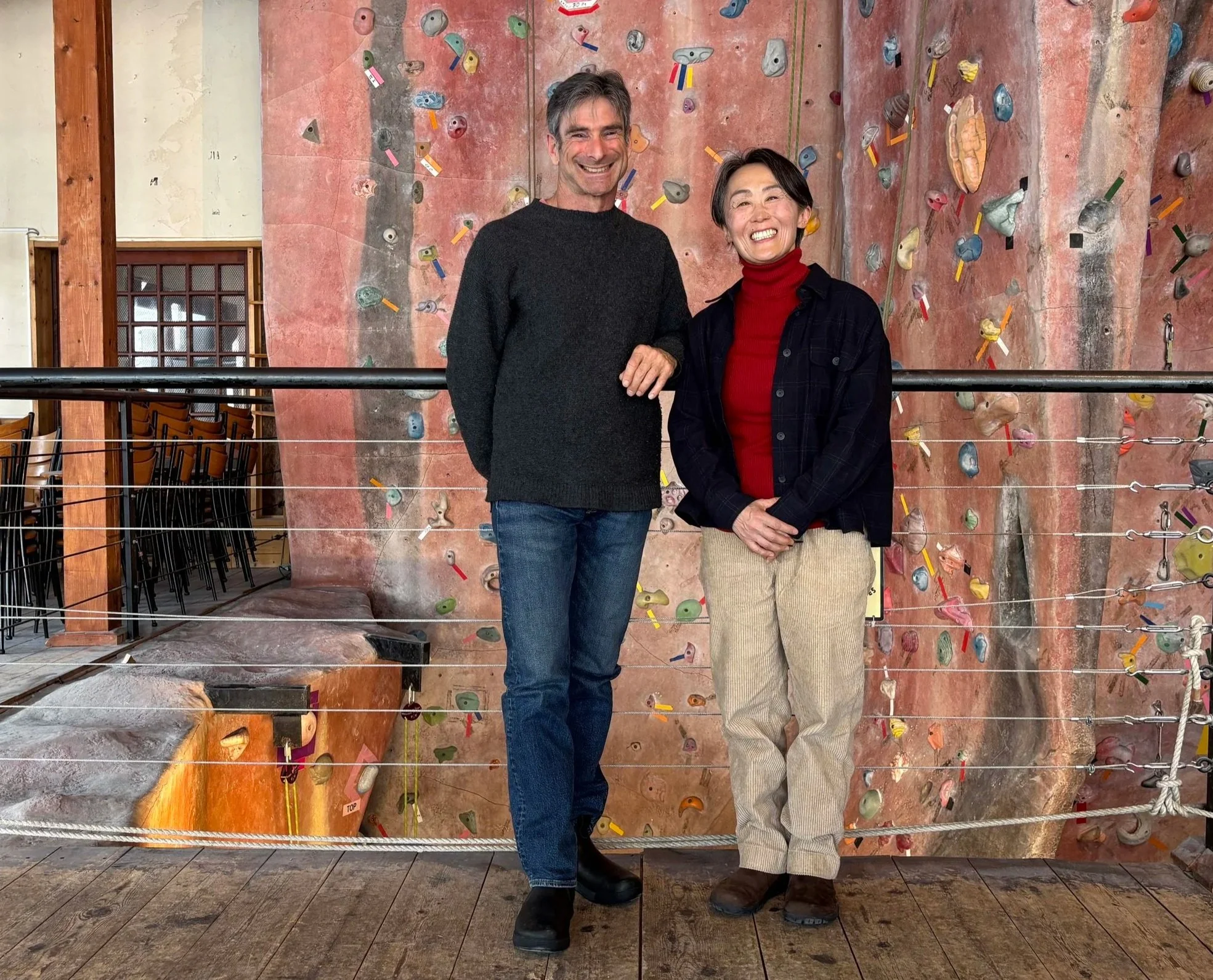
INTERVIEW BY JACINTA SONJA & WENQI
IMAGES COURTESY OF NAC
PORTRAIT PHOTO BY JACINTA SONJA
(Parts of the interview conducted in Japanese have been translated for publication)
There are certain names woven into the fabric of Niseko. Not just business owners, but people whose decisions quietly shaped what the town would become. For three decades, Ross and Yoko Findlay have been among them. From introducing rafting to Hokkaido to creating one of Hirafu’s most recognisable landmarks, and mentoring generations of outdoor professionals, their influence extends well beyond a single company. As they pass Niseko Adventure Center into its next chapter, we sat down to reflect on timing, risk, community, and what it means to build something that lasts.
You both arrived in Niseko in the early 1990s. What first brought you here?
Ross Findlay (R): I studied sports at university in Australia, but in the late ’80s there was a recession and little work, especially in sports. Japan was in its bubble era, so I came over in 1989 and worked as a ski instructor at Teine Highland in Sapporo. On my days off, I’d visit Niseko. I met Yoko here, and by 1990 I was spending most of my time in Niseko.
Yoko Findlay (Y): I’m from Sapporo. At the time, I was training for mogul competitions and was part of the Japanese National Team. I would ski all day, then work six hours at a lodge in Niseko. I skied every day. It was a very exciting time.
What do you remember most about Niseko then?
Y: It was very crowded. You had to wait 20 or 30 minutes for the lift. There were buses constantly arriving from Chitose. It was almost all Japanese visitors. There were very few foreigners.
R: It was peak ski bubble. Young people had money and skiing was what everyone did.
You founded the Niseko Adventure Center (NAC) in 1995. What was it like?
R: By 1994 and 1995, the ski numbers were dropping. Pensions weren’t full anymore. Winter alone wasn’t enough. People were saying, “Maybe we have to work in summer.” But there was nothing to do here in summer. I thought, if there’s nothing to do, no one will come. So if I create something, maybe they will.
You were the first to bring rafting to Hokkaido. How did people react?
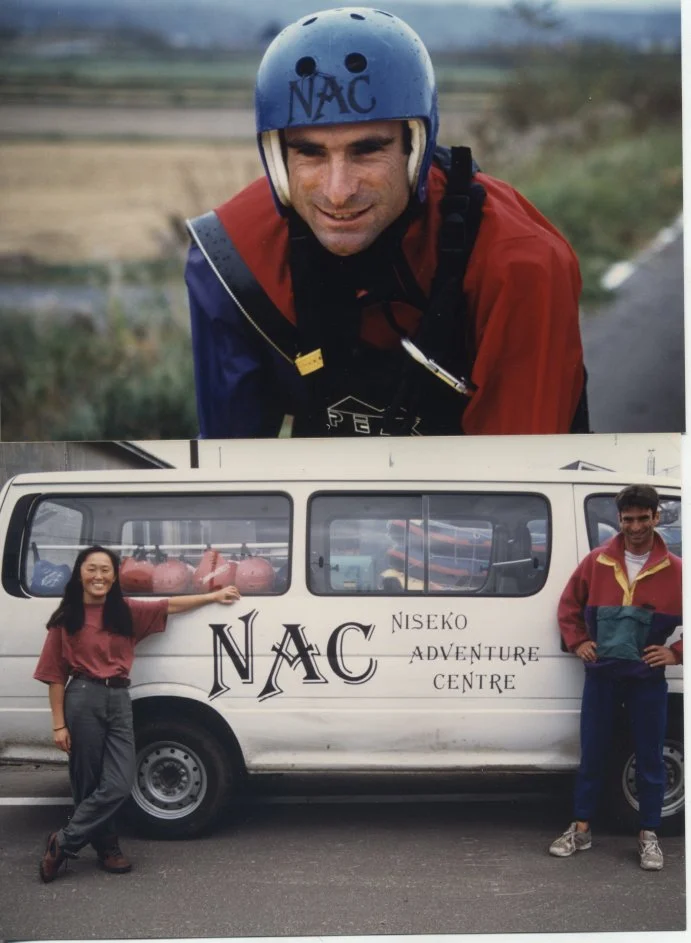
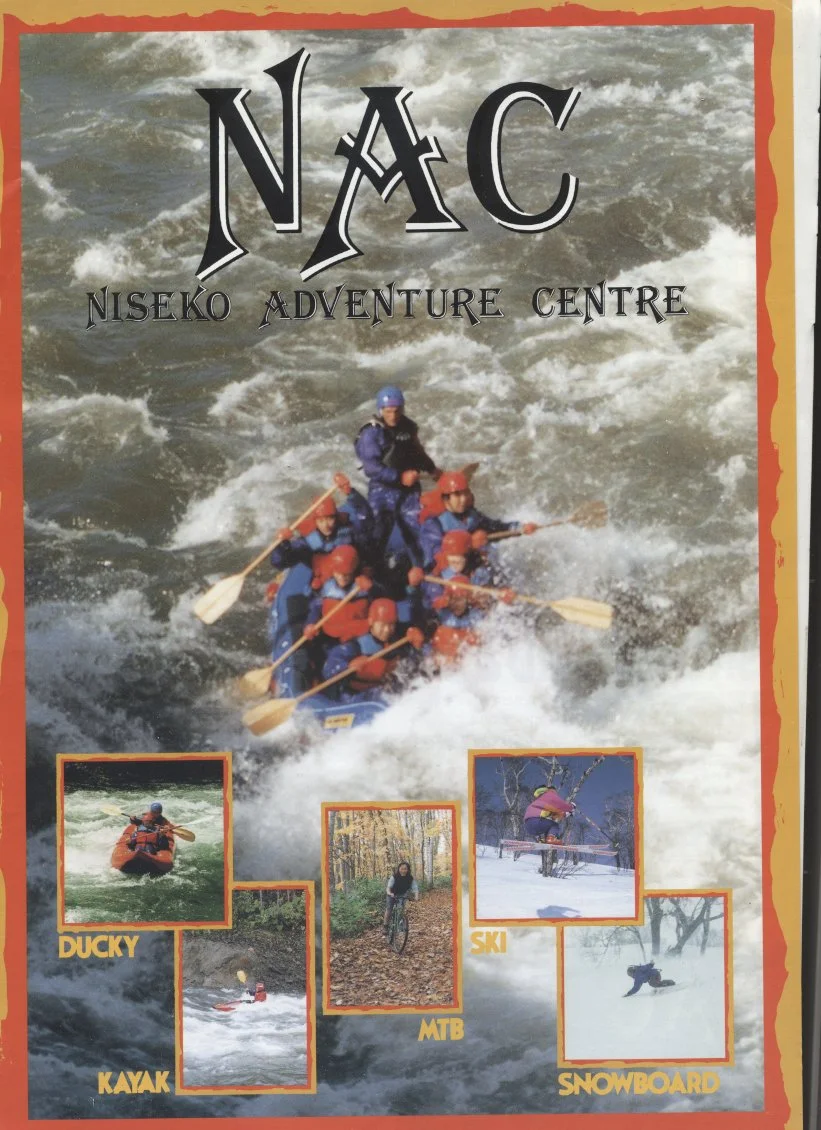
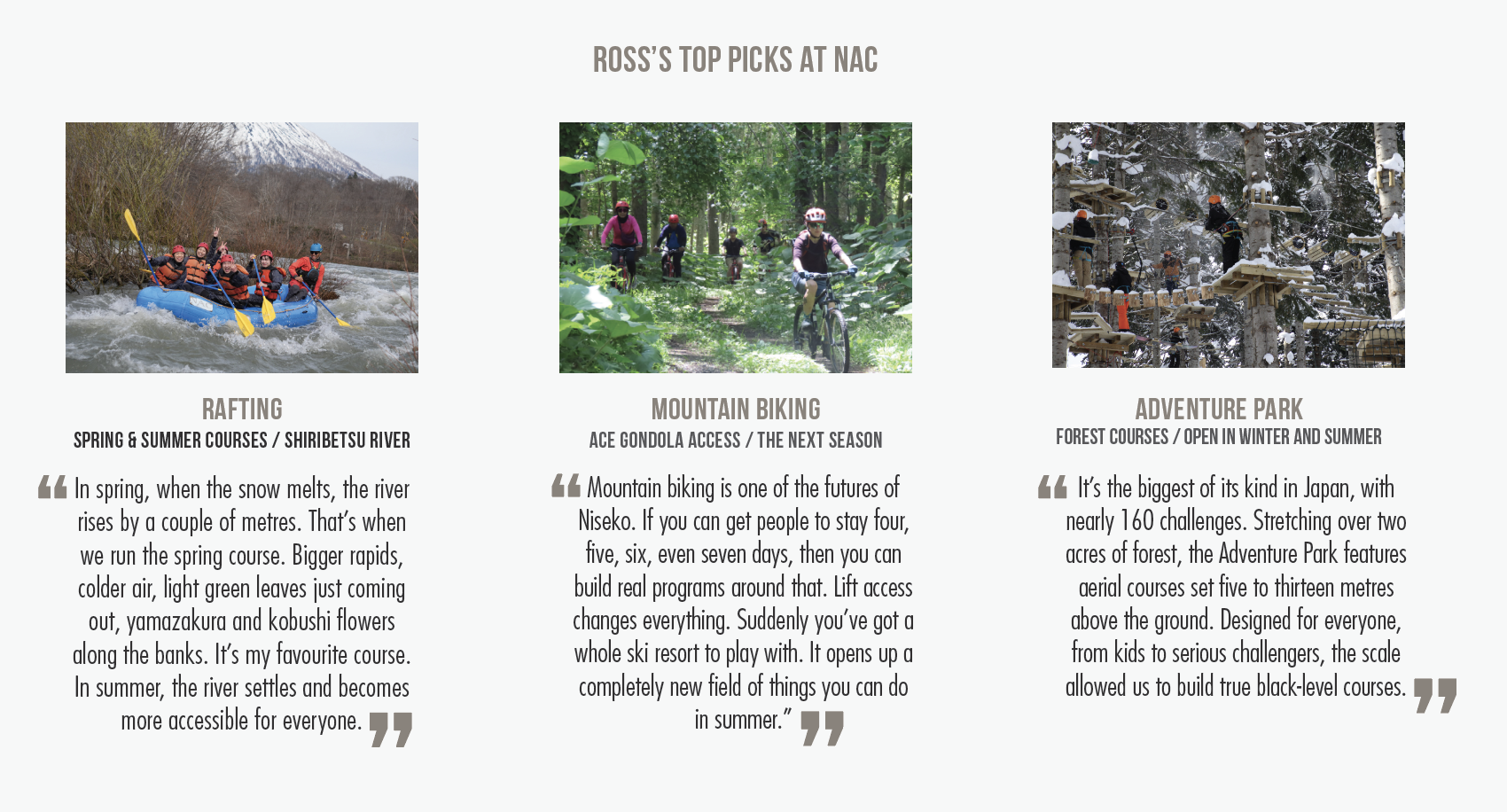
R: Rafting was new in Japan, even the word was unfamiliar. I knew the river from kayaking, so I knew how to run it. At first, hotels didn’t send guests because rivers were seen as dangerous. Visitors who’d rafted overseas became our first customers. Once the media picked it up, it spread quickly.
How did locals react when they first saw rafting?
R: Farmers nearby said they liked hearing the laughter. At the beginning, cars would slow down to watch us launching boats. (laughter)
You didn’t stop at rafting. How did NAC evolve?
R: We added duckies, kayaking, SUP and trail running, so people could explore beyond the river. Then we built a climbing wall for bad weather days. Over time, it became about offering a full spectrum of adventure. Later we created the Adventure Park, now the largest of its kind in Japan.
Do you have a favourite memory of the adventures you had at NAC?
R: There isn’t one big moment. It’s the everyday smiles that stay with me. I remember guiding a boat of hearing-impaired kids down the spring course. I sat in the middle so they could follow my hand signals rather than rely on verbal instructions. Watching them work together through the rapids is something I’ll never forget.
What was the vision you had for NAC?
R: If someone comes for a week, there should be a week’s worth of things to do. That’s always been the idea. And jobs. When I came from Australia during a recession, I knew how it felt not to have opportunities. Creating outdoor jobs for young people was important. Many former staff have gone on to start their own businesses here. That’s something I’m proud of.
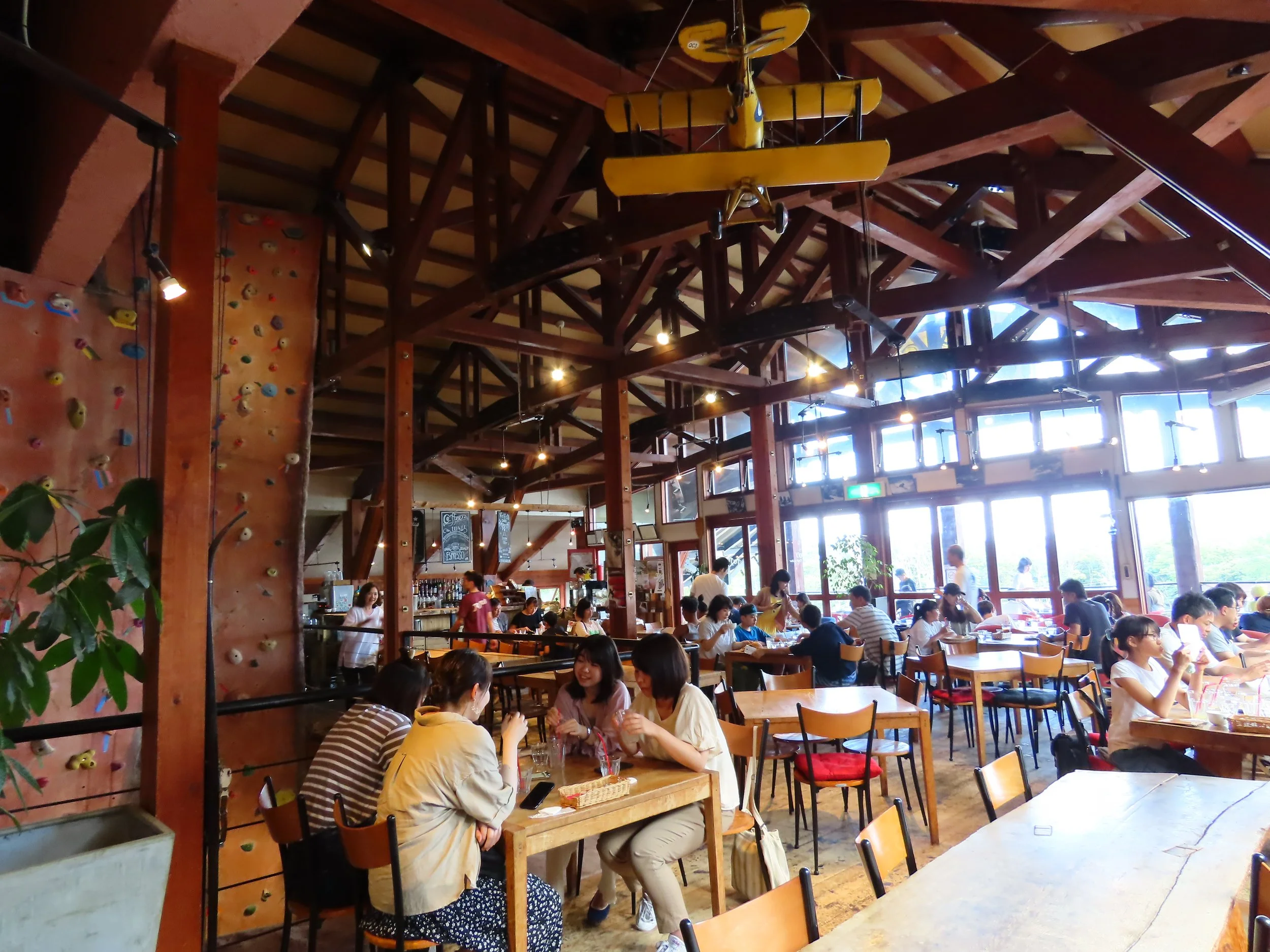
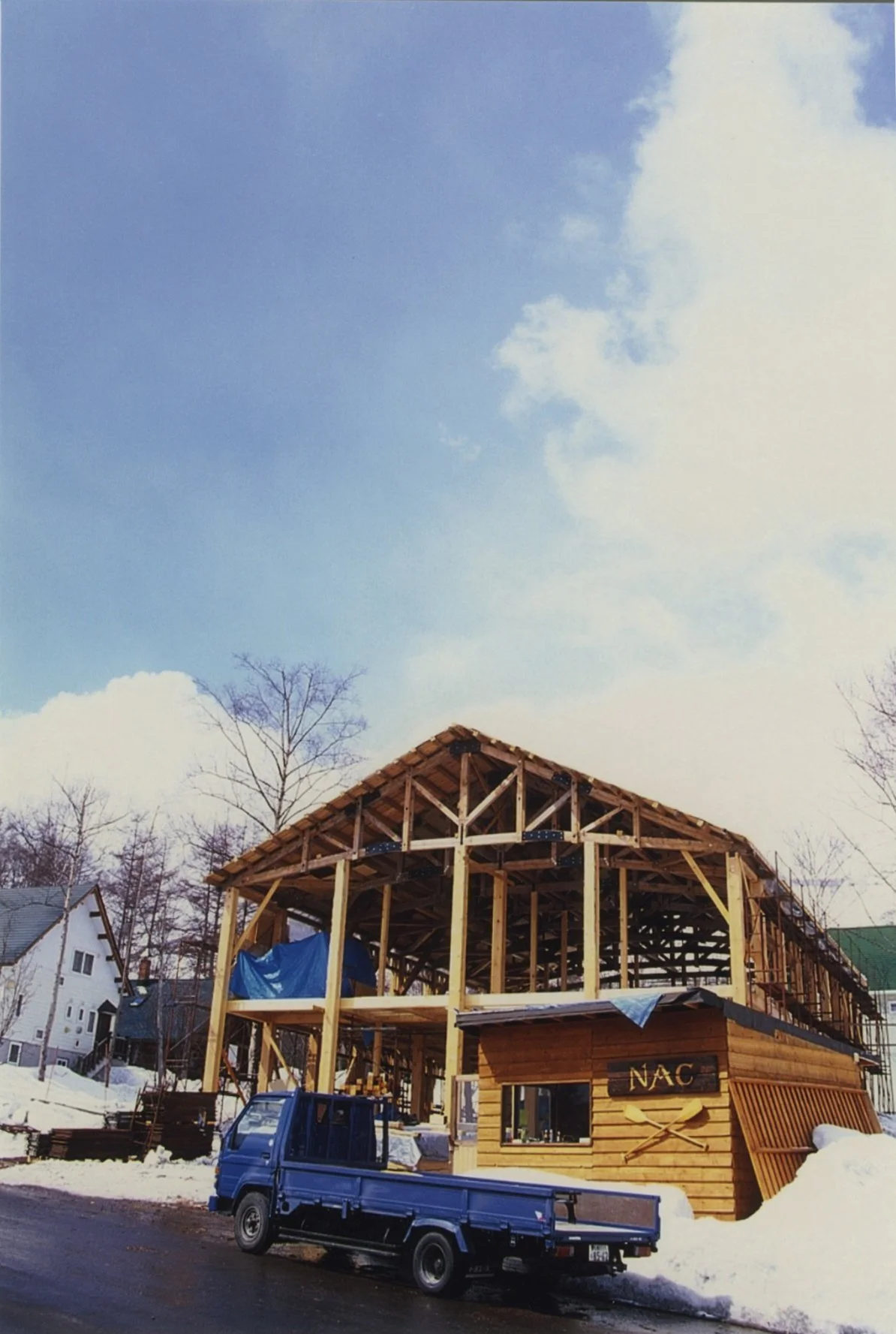
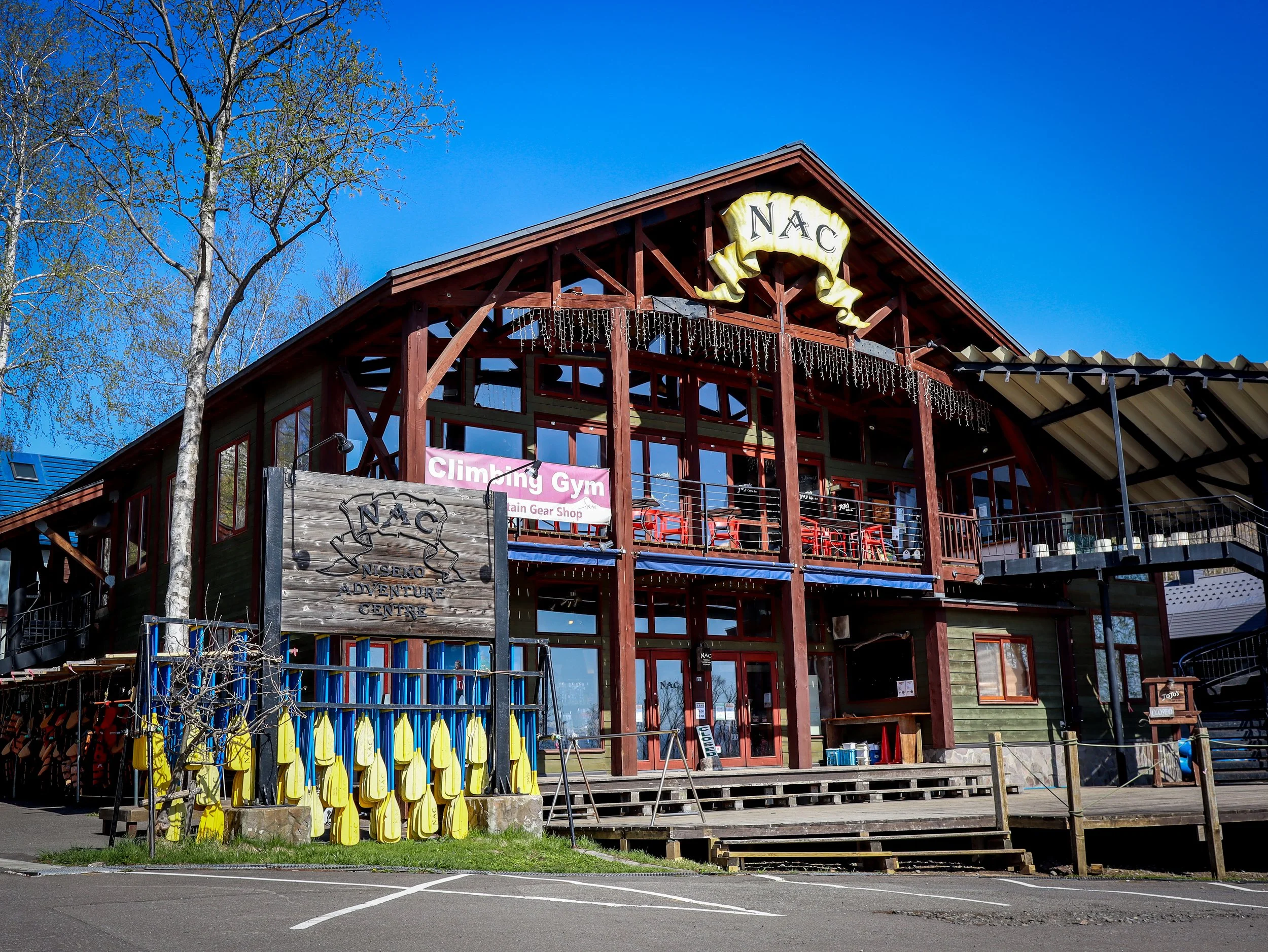
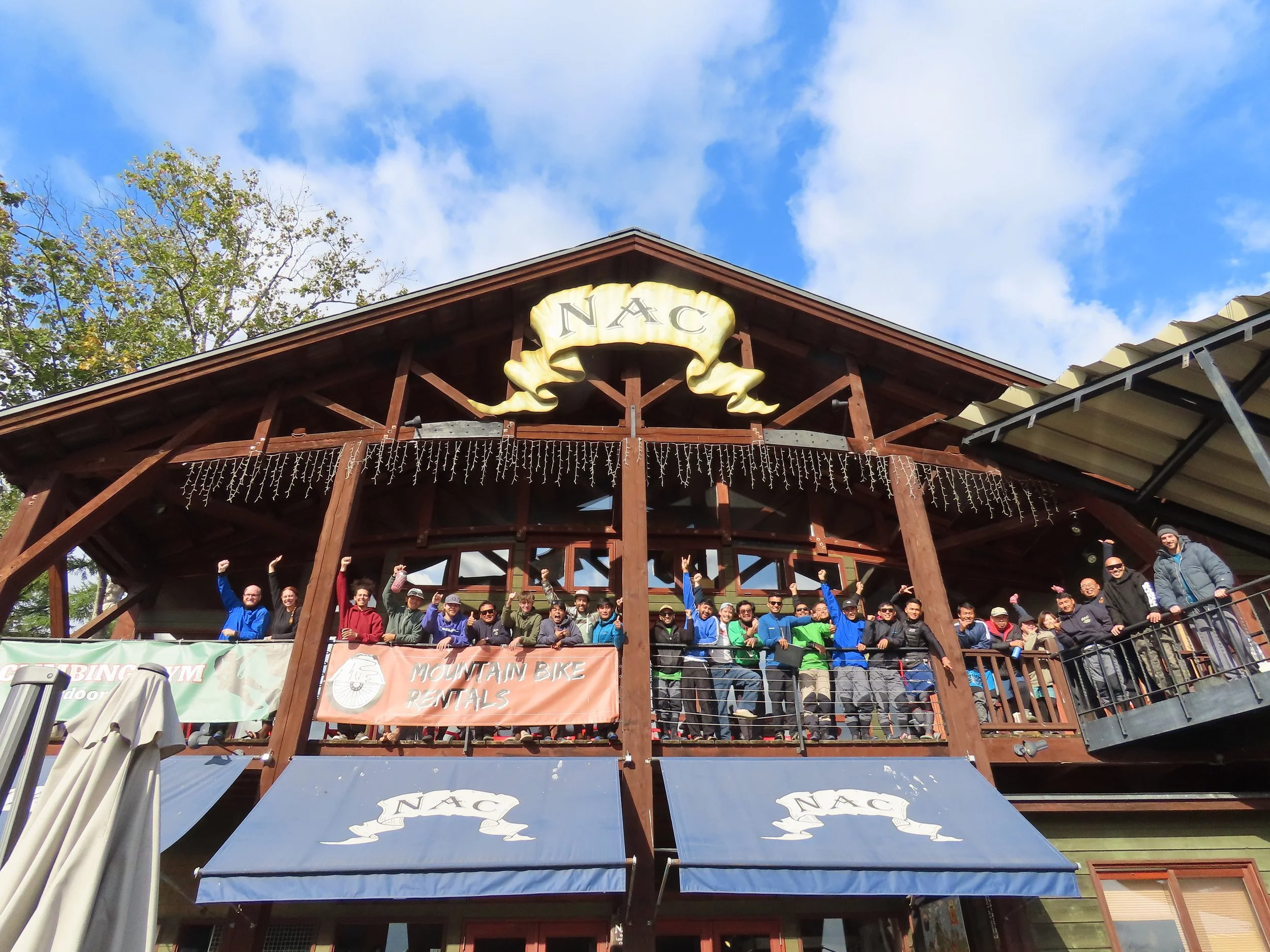
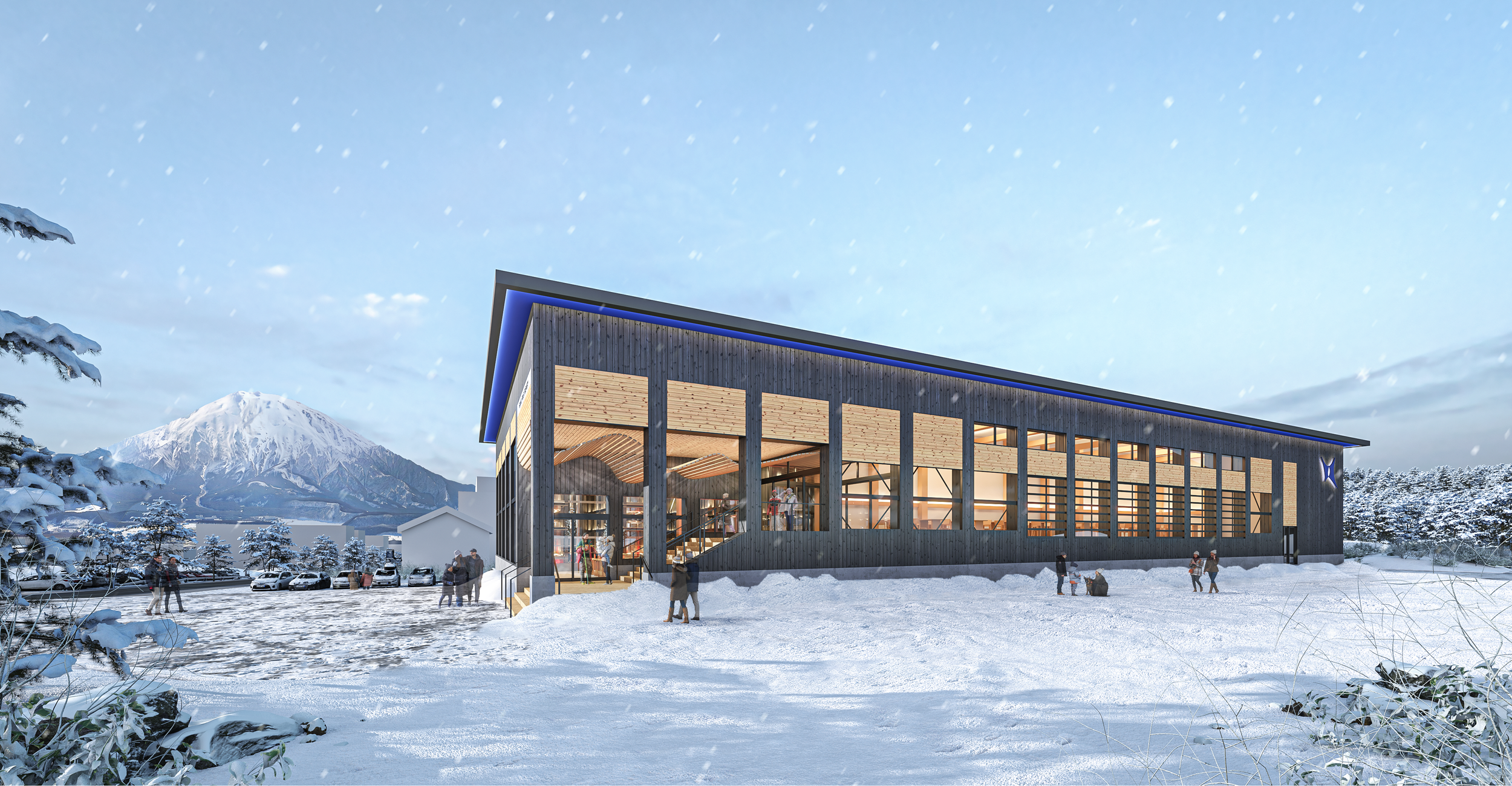
The NAC building is now iconic in Hirafu. How did it come about?
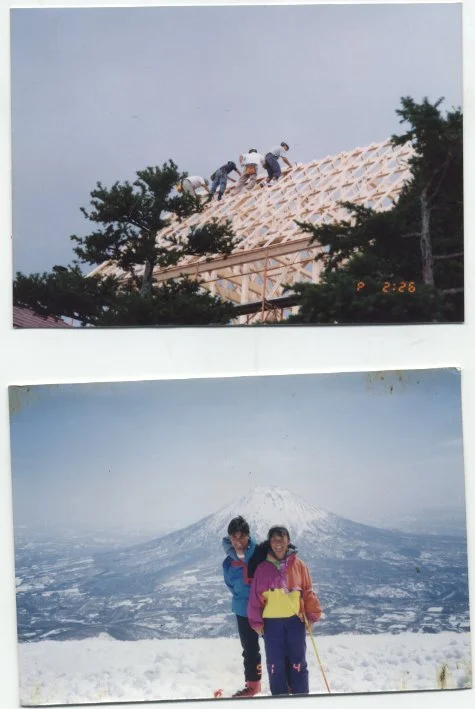
R: It was originally a junior high school gymnasium. We dismantled it and rebuilt it here, and it became a real community effort, with people pitching in to make it happen. I wanted to recycle the materials and create something solid and lasting, something more permanent. That’s why we added the restaurant, shop and climbing wall. The accordion doors were designed to open up the views, so when they’re folded back, you feel almost outside.
There’s even a story about the power lines.
R: Yes. Around the time of the G20 summit, I mentioned that the power lines were blocking the view of Mt Yotei. Somehow it got taken seriously, and they removed them. But it’s always been a group effort here. Pension owners pushed for the brick walkways. Many people have worked to improve this town.
You also helped create some major events.
R: I’ve always loved sport, so I started creating races. We ran a teams-of-four adventure race for ten years, and the trail run still continues today. I also designed the Hanazono Hill Climb and the Niseko Classic, running the event for two years before handing it to an NPO. Seeing it grow, and now hosting the World Masters Championship, is special. I also ran an open water swim at Lake Toya for 18 years.
When you look back, what are the biggest milestones?
R: Opening this building. Opening the Adventure Park. Starting the climbing gym in Sapporo. But honestly, the biggest measure has always been whether people are having fun. If staff and customers are smiling, we’re doing it right.
You’ve recently sold NAC to Tokyu.
R: It gives NAC the scale we never had. We were competing against major resort operators with larger budgets. With Tokyu, there’s lift access, marketing strength, and room to grow. It allows summer to evolve in a more integrated way, especially with mountain biking. It feels like the natural next chapter. From next spring, NAC will be expanding to Alpen NODE in Grand Hirafu Ski Resort.
What’s your top tip for someone visiting Niseko?
R: Come in December, when it’s quieter and stay a week if you can. Niseko works best as a base. You can reach Sapporo, Otaru, Shakotan, Lake Toya and nearby resorts within a couple of hours. The snow is steady and reliable. It feels international, yet you can still experience authentic Japan in Niseko and Kutchan. Summer’s just as special, with four clear seasons and a slower pace.
After three decades, what stays with you most?
R: The people. The staff, the customers, the community. I’m grateful to everyone who worked with us and everyone who came and had an adventure. We were able to give people good memories of Niseko, and that means a lot.
Y: We started from nothing. Little by little, people came together to help. Great staff joined us, customers followed, and we shared the same energy. We’ve been very fortunate. I’m excited for the next 30 years of Niseko. I think it will move to an entirely new level.
––
Thank you Ross & Yoko-san!
Niseko Adventure Center (NAC)
NISEKO HIRAFU 1-JO 2-CHOME 4-8 KUTCHAN-CHO, ABUTA-GUN, HOKKAIDO 044-0080, JAPAN
(new location at Alpen Node from spring 2026) nacadventures.jp 0136-23-2093