
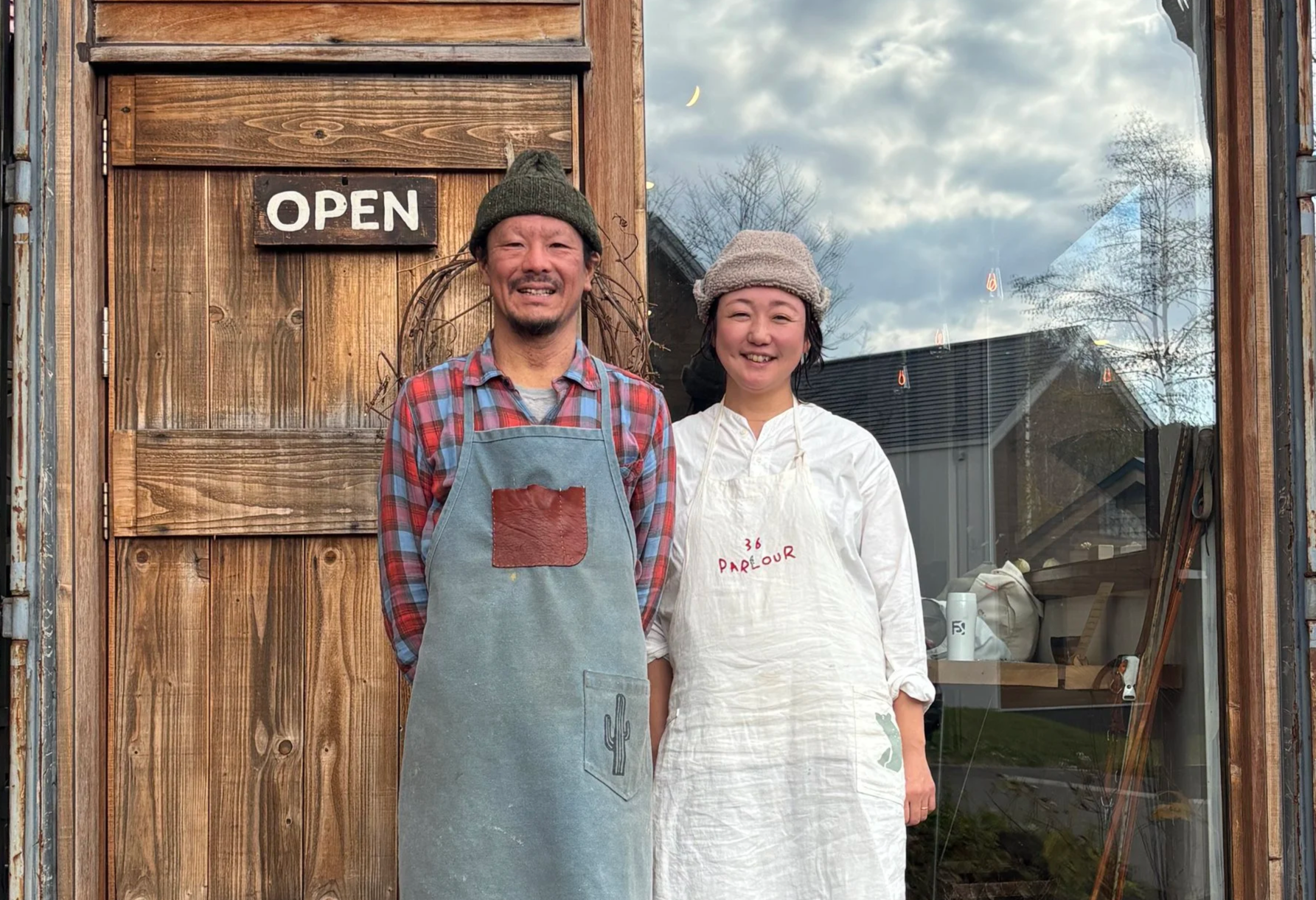
Issue 59 | 5 Minutes with Yasuhide & Mie Ichitani, Sanroku Parlour
INTERVIEW BY JACINTA SONJA
TRANSLATION ASSISTANCE BY YURI LEE-KANEKO
PHOTOS BY JACINTA SONJA / ADDITIONAL IMAGES COURTESY OF SANROKU PARLOUR
(Interview conducted in Japanese and translated for publication)
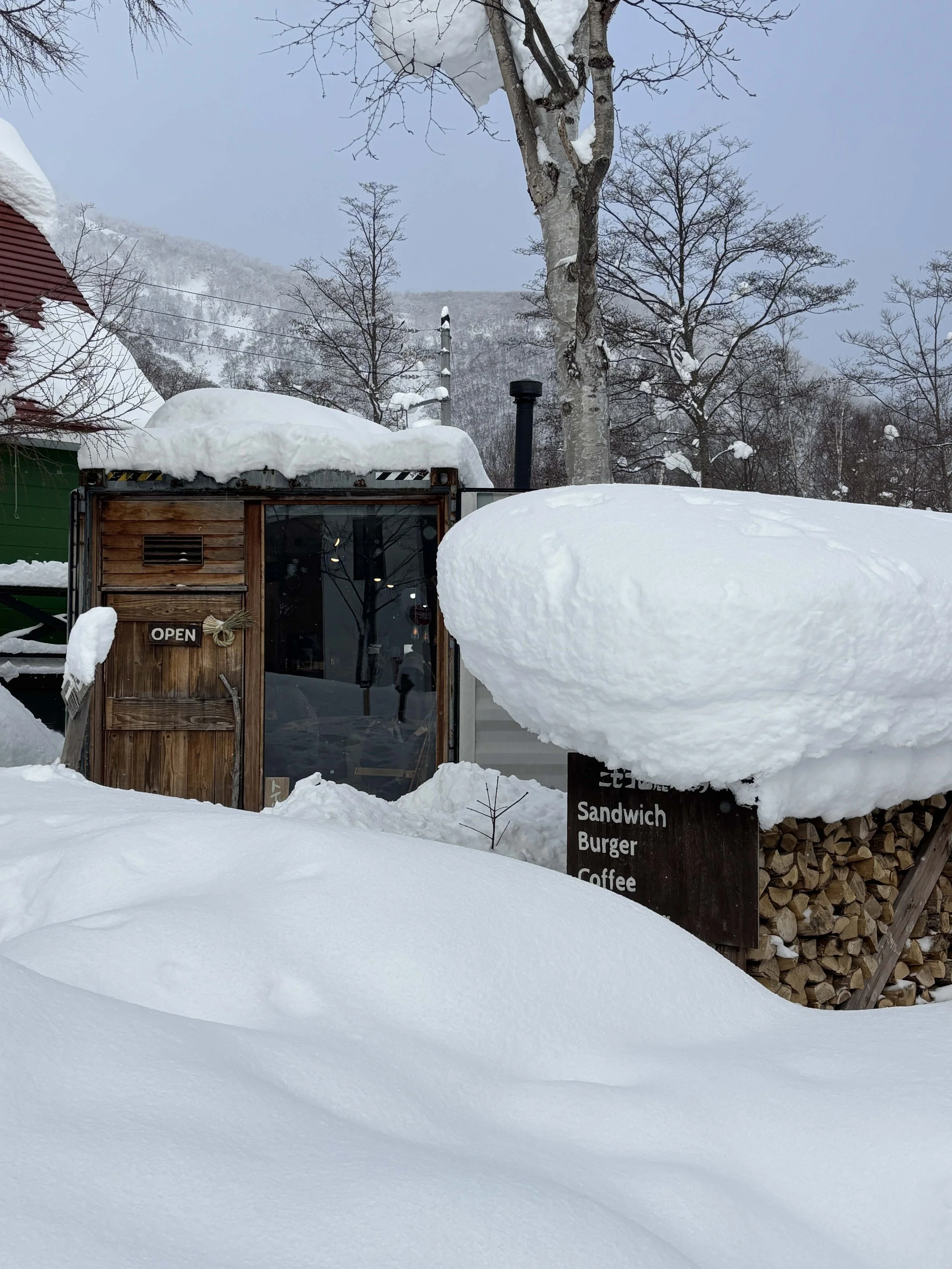
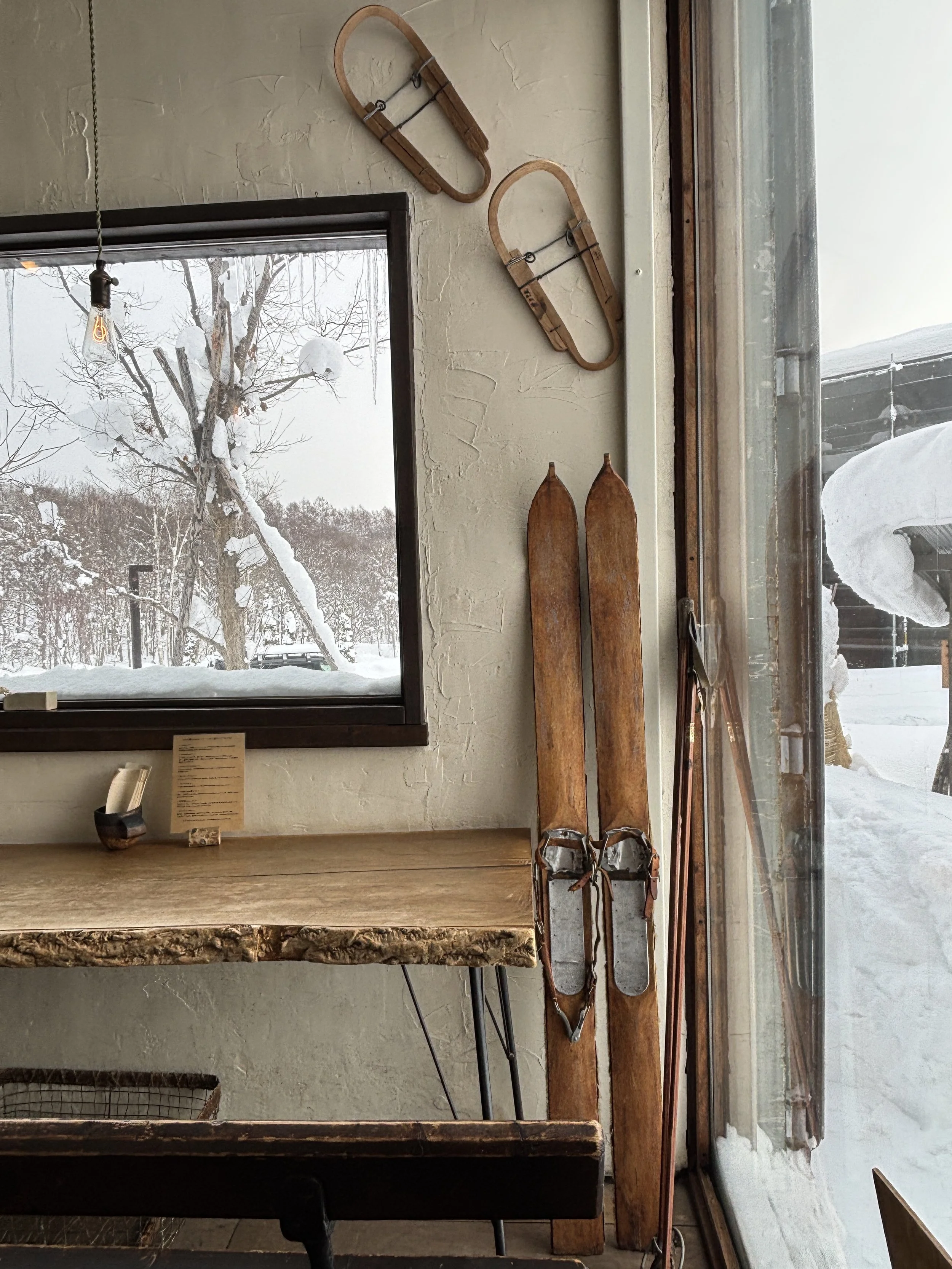
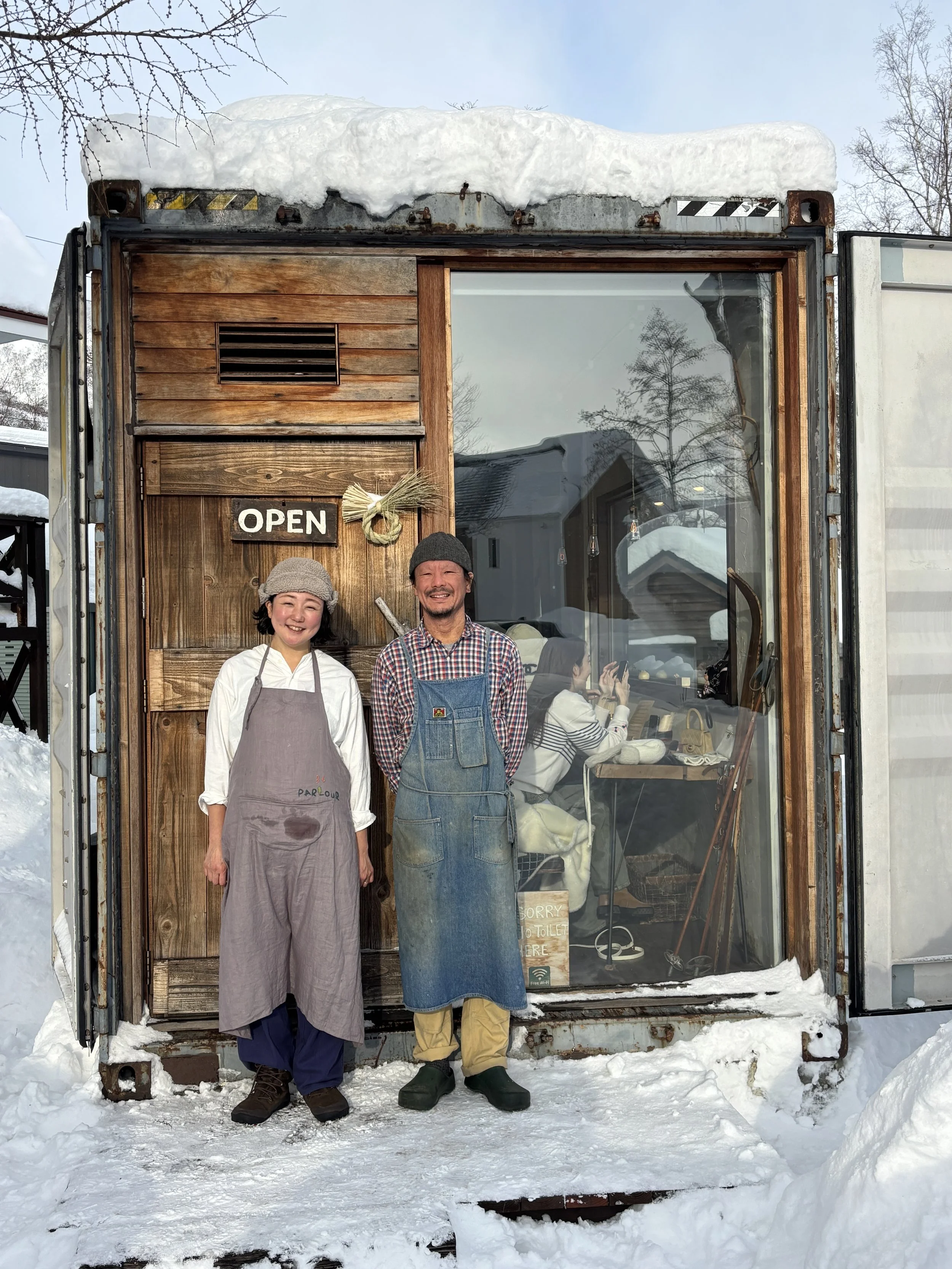
At first glance, Sanroku Parlour looks like a simple container café tucked into the landscape beneath Mt Annupuri. Step inside, though, and you’ll find one of Niseko’s most quietly captivating dining experiences – a space where everything is handmade, from the bread and smoked salmon to the pottery and atmosphere itself. Run by Yasuhide Ichitani (better known to locals as Ichipon-san) and Mie Ichitani, the husband-and-wife duo behind this understated gem, Sanroku Parlour embodies the art of living well. Their philosophy is simple: do one thing with care, do it every day, and let nature and craft shape the rest.
Tell us a little about yourselves, about your background and how Sanroku Parlour began.
Yasuhide Ichitani (I): I was born in Sapporo and trained as a chef. I spent 11 years working in Italian restaurants and an organic bistro in Tokyo before returning to Hokkaido.Mie Ichitani (M): Our lives have always revolved around food. I worked in fashion, but I studied nutrition and have long been interested in food and wellbeing.
How did you both meet?
M: We went to the same high school but didn’t know each other then. Years later, after returning to Sapporo, we reconnected while working at the same place. We got married in 2014 (laughs).
What led you to rethink your path in cooking?
I: Over time, I began questioning that world. It takes many years to cook the way you want, and the environment can be demanding. My health wasn’t good at the time, which pushed me to study ingredients, additives, pesticides, and how food affects the body. I wanted to cook in a way that felt better for people, including myself.
What made you open Sanroku Parlour?
I: I wanted to make sandwiches without additives or pesticides, something people could enjoy easily. We opened in February 2017.
How did the name Sanroku Parlour come about?
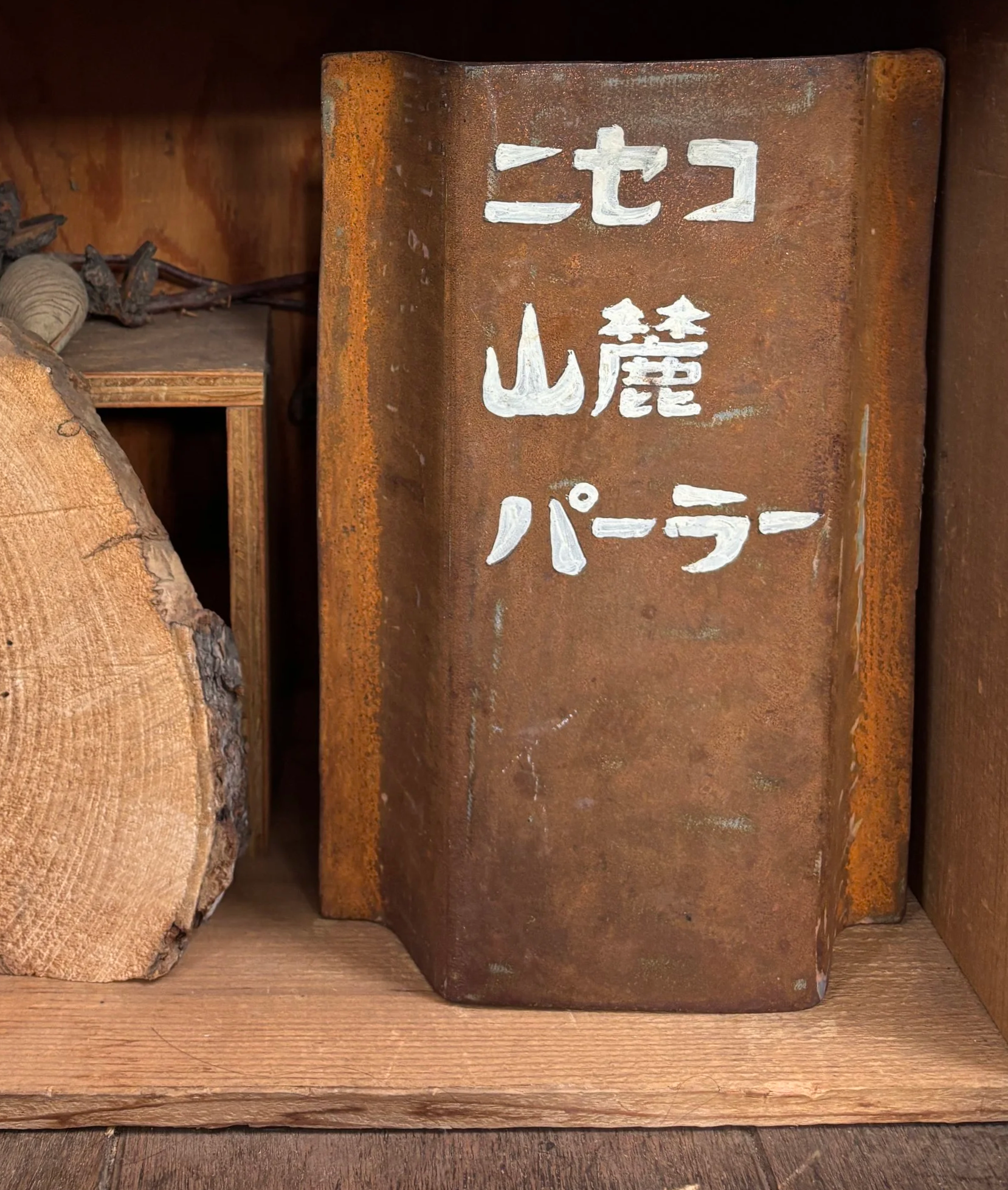
M: “Sanroku” is a Japanese word meaning “at the foot of a mountain,” which felt right for Niseko. We liked the word “parlour” because it sounds warm and welcoming, a place where people naturally gather. Together, it simply means a small parlour at the base of the mountain, though many overseas guests affectionately call it “Three-Six (36) Parlour.”
Why sandwiches?
I: Italian food can feel a little formal. Sandwiches are casual and approachable. Everyone loves them, and there’s no barrier, even though we still use good ingredients and proper techniques that I learned through my years in Italian kitchens.
Your food is almost entirely made from scratch. Why is that important?
I: Ready-made products often contain additives. By making everything ourselves, from bread to ham, bacon, sauces, and mayonnaise. It’s more work, but we know exactly what goes into the food.
Do you make your bread every day?
I: Yes, we make our bread every day using natural yeast and organic wheat. We usually bake three types: campagne, ciabatta, and buns.
It has been eight years. Has Sanroku changed since opening?
M: The philosophy hasn’t changed, but the quality has improved. As we met more local farmers and producers, we were able to use better ingredients.
How do you source ingredients?
I: We try to use organic or carefully grown ingredients whenever possible. Our pork comes from Yoichi, known as Kitajima Wine Pork, eggs come from free-range farms, and vegetables from people we trust. Over the years, we’ve met many dedicated local producers, and those long-term relationships have deeply shaped how we cook and think about food.
Do you have a special seasonal menu?
I: Yes. For example, our smoked salmon is seasonal, and we smoke it ourselves. We don’t serve it in winter. Most of our fish comes from Shimamaki, sourced through people we know. It’s important for us to understand where ingredients come from and who is behind them.
How do you decide what goes on the menu?
I: We basically make what we like to eat ourselves (laughs). People often ask for recommendations, but it’s hard to choose because we like everything we serve.
Even your syrups and drinks are handmade.
I: Yes, we make all our juice syrups using pesticide-free fruits and vegetables. Our coffee beans come from Kotobuki Coffee in Sapporo, a place we’ve loved for years. We learned hand-drip brewing from them long before opening this café.
What’s a special ingredient that you found?
M: Our yuzu comes from Tokushima. We’ve visited the area and harvested it ourselves. It isn’t farmed, just wild yuzu growing in the mountains.
How has living in Niseko influenced your cooking and your life?
I: Living here changed our values. In the city, seasons can feel abstract. Here, you notice mountain grapes, wild mushrooms, and bamboo shoots as they appear. You feel the rhythm of nature more clearly, and that naturally influences how we cook and live.
The café itself feels very personal. Did you build it yourselves?
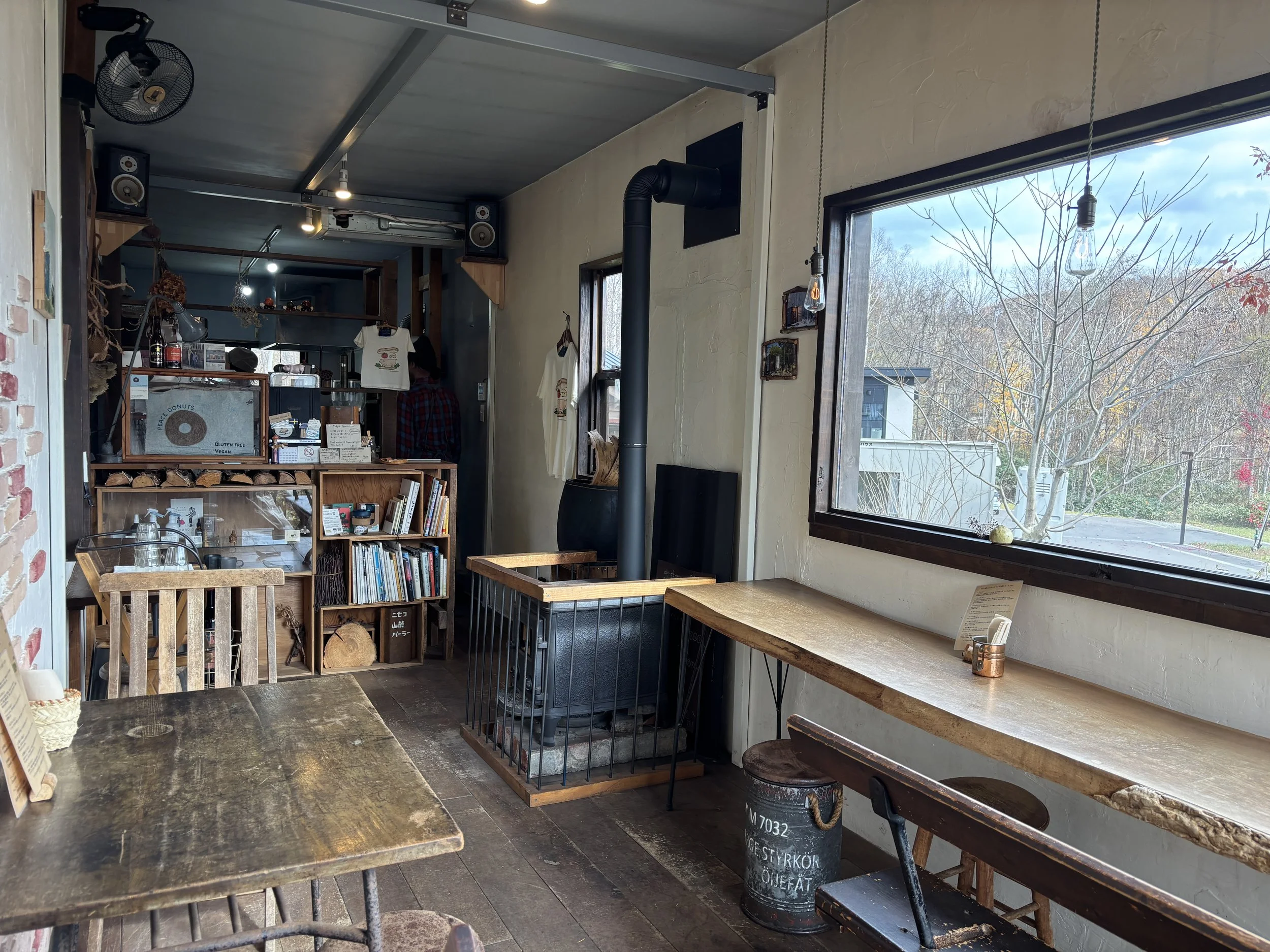
I: Yes. We were inspired by videos of people building small structures themselves. Instead of hiring someone, we wanted to build it with our own hands. We documented the process on Instagram from the very beginning. This artwork (pointing to a painting on the wall, also featured on the cover of What’s On #59) was painted by our friend Mayumi Yamauchi while we were building the café.
Many plates and cups are handmade too.
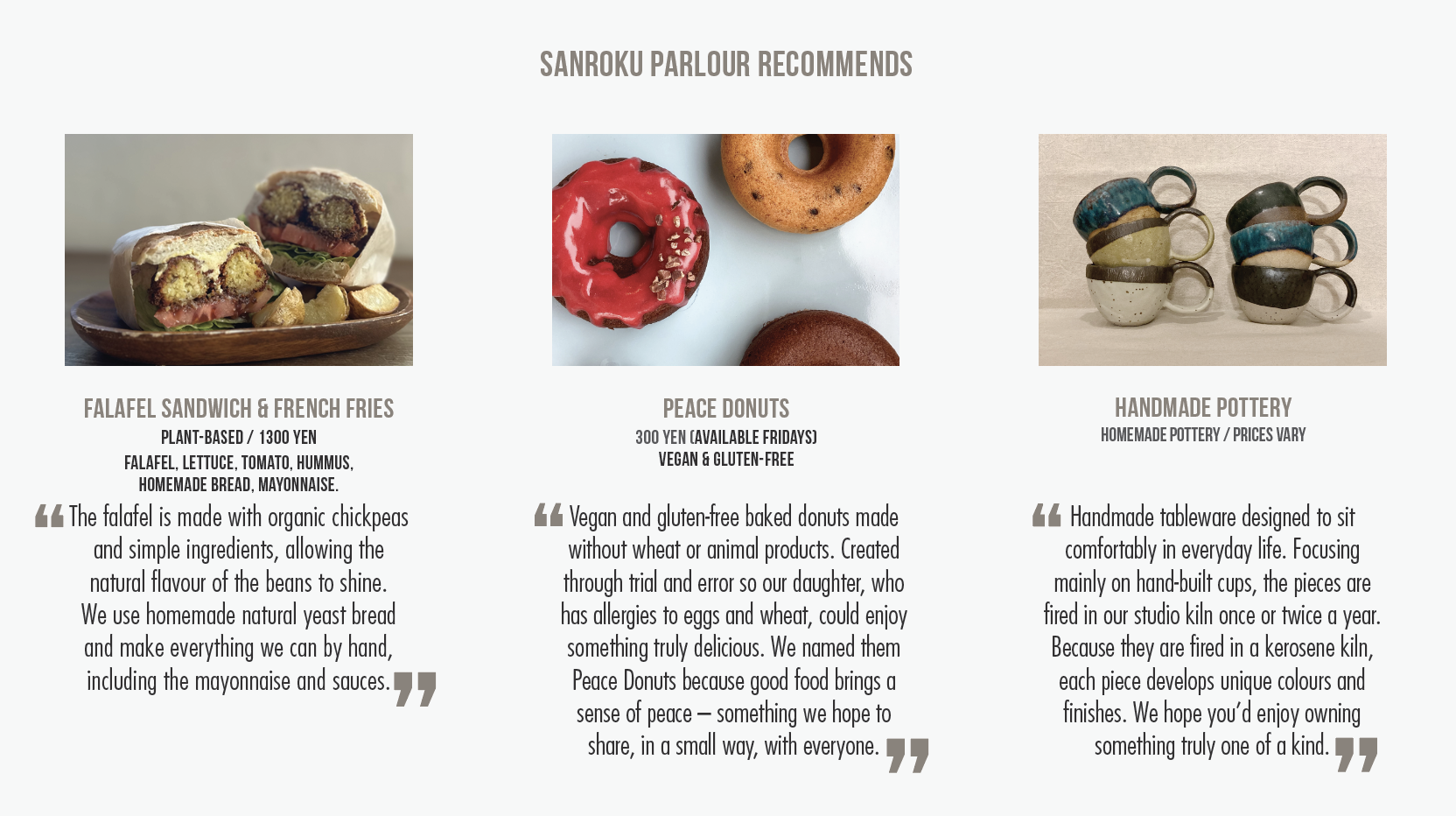
M: I make the pottery myself. I’ve been doing ceramics since before we opened. At first there weren’t many pieces, but over time we added more. Last year, we even built a small atelier beside the cafe.
We love your vegan and gluten-free donuts. How did they come about?
M: Our daughter isn’t able to eat wheat or eggs, so we started making these donuts at home for her. We thought we could serve them at the cafe too.
Is there a single item you’d recommend to first-time visitors?
The Falafel Sandwich is a favourite, alongside the Venison Burger and Croque Monsieur, which are also popular.
What do you hope people feel when they eat here?
That the food feels honest and comforting. If people leave relaxed, nourished, and wanting to come back, we’re happy.
––
Thank you Ichipon-san and Mie-san!
Mountain Kiosk Coffee
HIRAFU: 1-63, Kita 4-jo Higashi 1-chome, Kutchan-cho, Abuta-gun, Hokkaido (NEXT TO GRAND HIRAFU WELCOME CENTER)
mountainkioskcoffee.com
hours: 7:30 – 17:00